What a First Sport Session Can Tell You About Practice
A first sport session can show whether its practice routine fits your needs. Learn how to assess coaching, drills, pacing, and ways to take part.
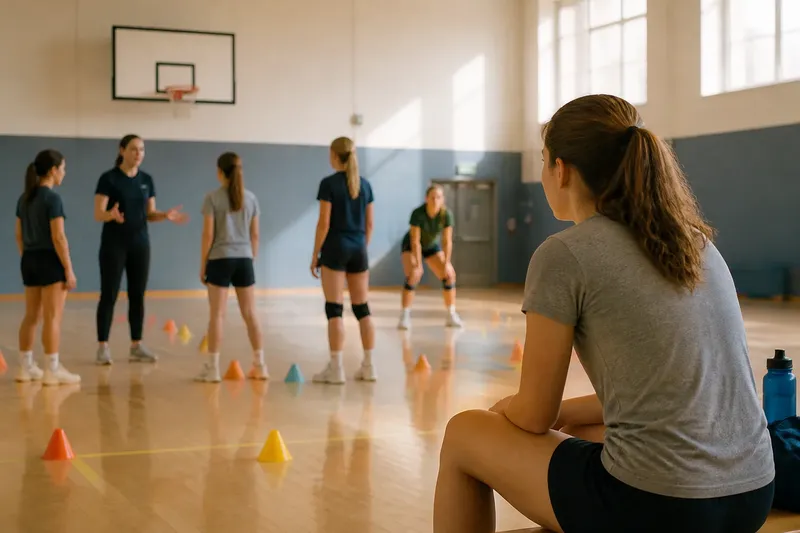
You arrive for a first sport session just as the coach lays cones across the gym floor. The group is moving through a drill, and you are trying to work out what you would actually be doing if you came back. A first sport session is a chance to understand the practice itself: how skills are taught, repeated, adjusted, and connected to play.
That focus is different from deciding whether you liked the room or felt at ease with the group. Practice has its own structure, and a session can be friendly yet hard to follow, or demanding yet clearly taught. Look at how the activity is organized before judging whether your own performance was good.
What makes a practice session easy to follow?
A practice session usually moves through a sequence: preparation, instruction, drills, and perhaps a game or other application. A drill is a repeated activity designed to develop a particular skill, such as passing to a moving teammate or keeping control of a ball. Clear transitions help you understand what each exercise is meant to teach.
Notice whether the leader explains the purpose of an activity and demonstrates what to do. Directions can be spoken, shown, or both; the useful point is whether participants have enough information to begin. If the drill changes, see whether the coach explains the new condition before expecting people to respond.
Instructions do not need to be elaborate. A concise demonstration, followed by a chance to try the movement, may be easier to use than a long explanation. You are not assessing whether every direction suits your preferred learning style; you are asking whether you can understand the next action and what to do if you lose track.
How can you tell whether a drill is teaching a skill?
Look for a connection between the exercise and the activity’s basic skills. In basketball, for instance, a passing drill might ask players to move after releasing the ball; in swimming, a coach might isolate one part of a stroke before asking swimmers to use the full movement. The exact exercise matters less than whether its purpose is understandable.
Repetition can be useful when it gives participants a chance to notice and adjust. Watch for feedback that identifies an action, rather than a vague judgment about talent. “Turn your shoulders toward the target” gives a participant something to try; a general “do better” does not explain what to change.
Also notice whether the drill leaves room for different starting levels. That might mean a simpler version, a slower pace, or a more challenging variation. Adaptations are not evidence that someone is failing; they can help participants practice the same underlying skill at a suitable level.
What should you notice about pace and repetition?
Pace is the rhythm of instructions, attempts, and pauses. A fast session may keep experienced participants engaged but give a newcomer little time to process a new movement. A slower session can offer room to learn, though long waits may leave participants with too little active practice.
Try to distinguish the intended pace from a momentary interruption. A group may pause to retrieve equipment or clarify an instruction, while the regular pattern is more continuous. If the pace is hard to judge, ask the coach how a beginner typically approaches the drill rather than assuming that everyone is expected to perform it at once.
It is not worth counting repetitions or comparing your speed with someone else’s. Those details can distract from the more useful question: after a turn, do you understand what to attempt next? Focus on whether the session provides enough explanation and opportunity to practice, not on keeping score of your first efforts.
How do feedback and progression work in practice?
Feedback is information intended to help someone adjust an action. It may come from a coach, a teammate, or the structure of the exercise itself. Useful feedback is specific enough to act on and delivered in a way that does not leave the participant guessing about the next attempt.
Progression means changing an exercise as participants become more comfortable with its basic form. A coach might add movement, introduce a decision, or combine separate skills. You do not need to see a dramatic change during one visit; you are looking for a sensible relationship between the starting task and what follows.
Imagine you attend a beginner volleyball practice where the first drill is a stationary forearm pass. The coach demonstrates the arm position, lets the group try, then asks participants to move one step before passing; you follow the first version but lose control during the moving drill. The observable result is that you understand the basic contact but need more practice coordinating movement, a specific question you could raise before trying the next session.
Which practice questions should you ask?
How are drills adjusted for beginners?
Ask whether a drill has a simpler starting version or can be slowed down while you learn its movements. The answer tells you whether you can work on the same skill without pretending to be ready for the full exercise.
Can I ask for an instruction to be shown again?
Ask the coach how participants usually get clarification during practice. A clear answer helps you know whether to raise a hand, approach the coach between drills, or ask a teammate to explain the next turn.
How does the session move from drills to play?
Ask whether participants use the practiced skills in a game or another activity later in the session. Knowing that connection can help you understand why a drill matters, even if it feels repetitive at first.
What should I focus on during a first practice?
Ask for one basic skill or instruction to keep in mind rather than trying to improve everything at once. A focused aim makes it easier to tell whether you understood the coaching and what you might want to practice next.
How can you assess the practice before returning?
Use observations tied to the session, not broad impressions. The following checks connect something you can see to a practical next decision:
- Instructions: Check whether the coach explains or demonstrates each new drill. If you can tell what to do, then note which explanation helped; if you cannot, then ask for a demonstration or clarification before joining that drill.
- Practice purpose: Check whether the skill being practiced is clear. If you can connect the drill to a basic action in the sport, then consider trying it again; if not, then ask the coach what the exercise is intended to develop.
- Opportunity to try: Check whether participants get a turn after the explanation. If you have a chance to practice, then notice what you could repeat; if waiting takes over, then ask whether another group or rotation offers more active turns.
- Feedback: Check whether corrections describe an action you can change. If they do, then try that adjustment on a later attempt; if they do not, then ask for one specific cue or request that the movement be shown.
- Drill variations: Check whether the exercise can be made simpler or more challenging. If a suitable version is available, then ask to use it; if not, then ask whether observing the drill first is an option.
- Pace: Check whether you can follow the transition from one activity to the next. If you can, then use that routine as a guide on a return visit; if you cannot, then ask the coach to explain the session sequence before the next practice.
- Connection to play: Check whether a practiced skill appears in a game or applied exercise. If it does, then notice how the skill is used; if it does not, then ask when participants typically practice it in context.
Say you attend a beginner tennis session and want to know whether the coaching is understandable. You see the instructor demonstrate a forehand, then ask you to hit from a nearby feeding position; after your first attempts, the instructor suggests turning your shoulders before swinging. You try the cue and can describe the adjustment even when the ball still goes wide, so your answer is that the instruction is actionable but the skill needs more practice; if the coach had only said “try harder,” you would still need to ask what to change.
Write down the clearest instruction you heard, the drill that was easiest to understand, and one question that remains. This keeps the decision grounded in practice rather than in a single successful or awkward attempt. If the session’s teaching made sense but the pace felt difficult, ask whether that pace is typical before deciding what to do next.
A first sport session does not tell you how quickly you will improve. It can tell you whether the practice offers understandable instructions, useful chances to try, and a way to work on skills at your current level. When you assess a first sport session, carry forward one concrete learning question; it gives your next practice a purpose without turning it into a test.