A First Club Open Day, Seen at Your Own Pace
A first club open day can feel easier when you know where to check in, what to ask, and how to leave with a clear next step and no pressure.
You reach the club entrance as a group begins warming up, and you are not sure whether to walk over or wait. A first club open day is easier to manage when you know where to check in and what information you want to leave with. You can take in the setting without deciding on the spot whether to join.
An open day lets you learn how the club presents its activities, what visitors are invited to do, and whom to contact afterward. You might watch, ask about the schedule, or try an activity if you choose. The visit is useful even if you leave with only one clear answer.
What do you want to learn at the open day?
Pick a practical question that will help you decide what to do next. For example, ask how a newcomer can attend a regular session, whether visitors need to register, or who can explain the club’s beginner activities.
Write the question in a phone note or on a small card. If the venue is busy, having it ready can make it easier to speak up. A simple opening might be, “I’m interested in learning how to get started. Who should I speak with?”
Set a personal limit for the visit, too. You might plan to watch part of a session, speak with one club representative, or stay until you have the information you came for. You can leave when that purpose is met.
How can you prepare for arrival?
Read the open-day notice for the entrance, meeting point, sign-in instructions, and any guidance about clothing or equipment. Save the name of a contact person if one is listed. Bring only what the notice requests; if you plan to observe, a phone for notes may be all you need.
When you arrive, look for a welcome table, a sign, or someone greeting visitors. If none is clear, ask a staff member or volunteer, “Where should open-day visitors check in?” This gives you a practical starting point without interrupting the activity.
Ask where visitors can stand or sit before settling in. A designated viewing area may not be obvious, and staying clear of walkways, equipment, and participants’ space helps the session continue smoothly.
If you might try an activity, ask what to wear and bring. Follow the club’s directions rather than guessing, since suitable clothing and equipment depend on the sport and venue.
What should you notice about the club’s arrangements?
Pay attention to how the open day is organized. Can visitors find the check-in point? Is it clear where to watch or how to join an activity? Do you know whom to approach with a question?
Notice how information is shared, too. A short explanation of the session, a posted schedule, or a leaflet may help you understand what is happening. If club members use unfamiliar terms, ask what they mean; you do not need to know the sport’s vocabulary before arriving.
A single busy moment may not tell you how the club handles every visit. If the person you hoped to speak with is occupied, ask when they might be free or whether there is an email address for follow-up questions. That gives you a way to get information without expecting a coach to step away from the group.
There is little value in collecting every leaflet or trying to speak with every member. Those tasks can turn a simple visit into an information hunt. Focus on your question and gather only what helps you choose a next step.
Which details should you check before deciding what to do?
- Check the entrance and meeting point on the notice; if they are clear, go there, and if not, contact the club before setting out.
- Check whether visitors must sign in; if the notice says yes, sign in first, and if it is silent, ask a volunteer where to register.
- Check what clothing or equipment is requested; if instructions are provided, follow them, and if they are missing, ask before joining an activity.
- Check who handles newcomer questions; if a contact is named, ask for that person, and if not, ask a representative who can explain how to start.
- Check where observers may sit or stand; if a viewing area is marked, use it, and if it is unclear, ask before choosing a spot.
- Check whether the open day includes a chance to try the activity; if it does and you want to participate, ask what to expect, and if it does not, ask how to arrange a first session.
How can you ask questions without interrupting?
Choose a natural pause, such as a break between activities or a moment after a representative finishes speaking with another visitor. Keep the question focused: “How does someone move from an open day to a regular session?”
A coach may need to return to the group, so ask whether another time or contact channel would work better. You can gather the basics in person and save detailed questions for a follow-up message.
It is fine to say that you are observing today. “I’d like to understand how the club works before deciding whether to try a session” sets a clear expectation. You do not need to give a reason or take part to make the visit worthwhile.
How do you decide what to do during and after the visit?
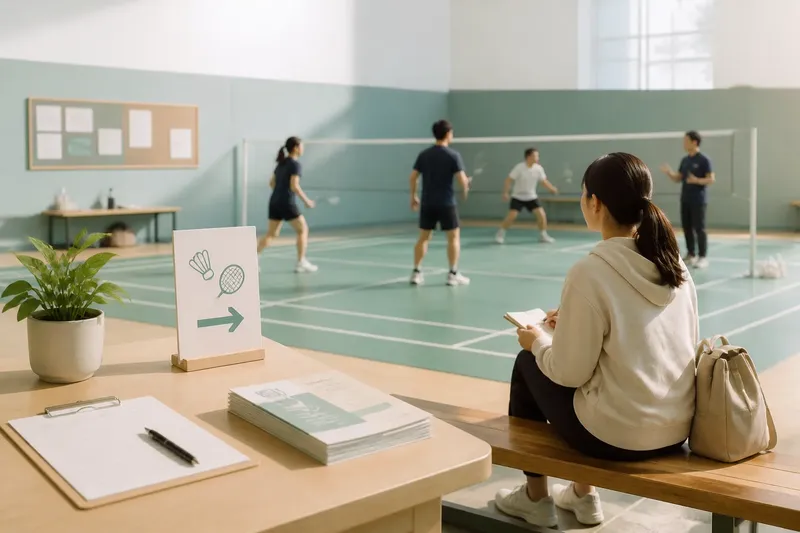
Imagine you arrive at a community badminton club with the question, “Can I watch before joining in?” A volunteer points out the visitor sign-in sheet and a bench beside the court, then explains that the coach can answer questions during a break. You sign in, watch from the bench, and ask what a first session involves; you leave knowing whom to contact and what to ask about next.
If someone invites you to try the activity, pause and decide whether you want to. You can accept, keep watching, or ask how to return another day. If you do participate, follow the organizer’s directions and ask for an explanation before starting whenever you need one.
Before leaving, note the answer to your main question and one detail you still need. For instance: “Visitors can watch from the bench; ask the coach about beginner sessions.” Then choose a next step, such as emailing the club, checking its information page, arranging another visit, or deciding not to pursue it.
What else do visitors often ask?
Do you have to take part at an open day?
No. You can watch and ask questions without joining an activity. If you are interested in trying it, ask the organizer what participation involves and whether you need to bring anything.
What if you arrive alone?
Look for the named contact or check-in point and introduce yourself with a simple sentence: “I’m here for the open day.” If there is no clear contact, ask a staff member or volunteer where visitors should go.
How long should you stay?
Stay long enough to get the information you came for or have the conversation you planned. You can leave earlier if you need to, or ask whether there is another open session.
What if nobody is available to speak?
Check for a sign-in point or information sheet, then ask another club representative who handles visitor questions. If you still cannot find someone, use the club’s listed contact channel afterward and ask when a conversation would be convenient.
A first club open day does not need to settle whether the sport is right for you. It can simply show you how visitors check in, where they can watch, and how to learn about a first session. Keep the next step small enough to fit your interest and your schedule.